Constructive Criticism is not Always Beneficial Op Ed by Tina Trupiano

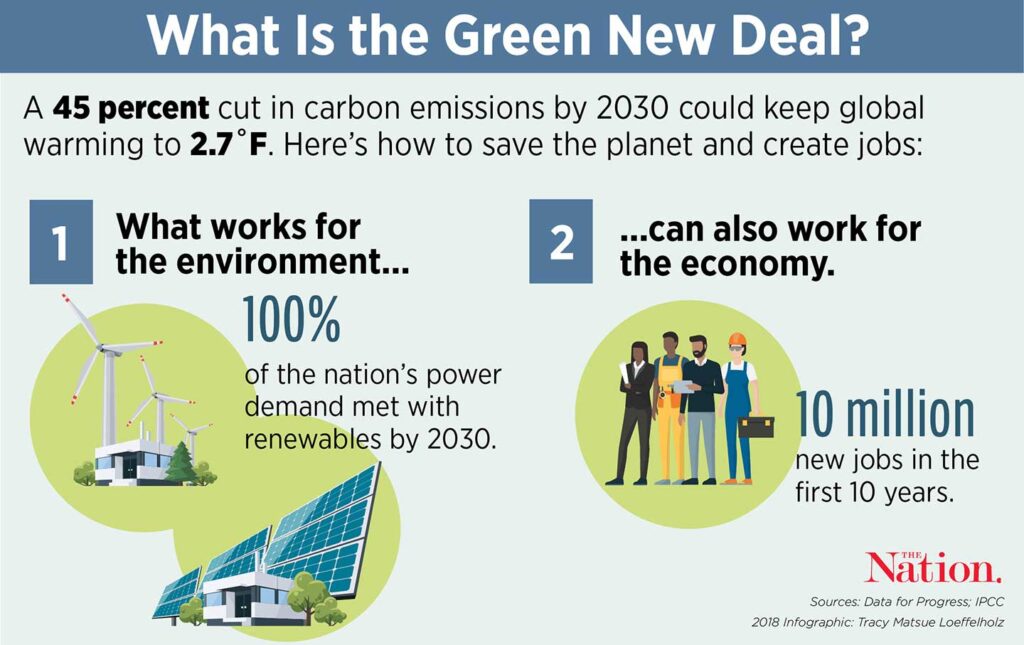
The Green New Deal lists copious problems as well as solutions to confront not only environmental emergencies but a decreasing social mobility, as well as nationwide injustice and poverty. The proposed legislation is clear and inclusive of many issues and addresses the need to keep global temperatures below 1.5 degrees Celsius. While sadly considered controversial to the Republican Party and Conservatives, it would make significant national and global progress regarding sustainability to the environment and society. There have been other proposals as well outside of the United States, yet some scholars think it is more beneficial to analyze their short sightings and negating their effects without offering a better solution or realizing that some steps are better then none. Sustainability and climate change is not only a challenging conversation, it has been a challenge to implement real change with conservative political parties arguing that it is a hoax or are more concerned with lining their pockets then saving the planet. Olivia Bina and Francesco La Camera’s journal article, “Promise and Shortcomings of a Green Turn in Recent Policy Responses to the “Double Crisis” aims to critique recent proposals as short sighted and not effective.  This type of analysis can lead to defeatism, and in a time where dire change is needed the goal should be to inspire steps to be taken then criticizing them before they even are in motion.

The double crisis is in fact a crisis. It will not be solved overnight but it will also never be solved without real conversation and implementation. In a perfect world, regarding The Green New Deal proposed by Alexandria Ocasio-Cortez in the US House of Representatives, real impactful change would be set into motion. There is even proof of its efficacy seeing as how The New Deal created the greatest Middle-Class growth during WWII. By taking this foundation and applying it in a “green” way, as well as a “just” way, we would see a profound difference.

While I agree with Bina and Francesco that, “Progress continues to fall short of what is deemed necessary.” This, in my opinion has nothing to do with the strategies discussed and offered but due to the interference of opposition from fiscal conservatives and racists. Additionally, while certainly market and environmental regulations will not completely end our worries on climate change and social inequality, it will however be far removed from where we are now, and will provide real, positive change on a scale unseen since WWII. While at least 6 international-scale responses are discussed in Bina and Francesco’s article, I am mostly concerned about The Green New Deal, one because if real change takes place the US will have to be the leader of the movement, and 2, I have a more detailed understanding of its strategies. Lastly if it did not cast the ability for real change, there would not be so much opposition towards it from opposing political parties.

Solving the “Double Crisis” will take time. As often argued, we do not have that much time when it comes to climate change, yet we also should not take any more time to give human beings equal justice and opportunity for a good life either. The US will need to lead the world on climate change initiatives and The Green New Deal must be implemented. That may not come without new leadership, but it will never come if we criticize every way it won’t be good enough instead of taking the first step today. Complicated problems take complicated responses and sometimes you must take the first step and work out the “kinks” along the way, but never getting started is the worst solution of all.
#greennewdeal #AOC #greenturn

The Other Side of Petro-masculinity: We Don’t Have to Engage in the Coal Culture War

A Post-class Followup by Carol Joo Lee

As much of the talk around combatting Climate Crisis pivots on “net-zero global emissions,” the phase-out efforts for fossil fuels vis-a-vis coal industry have become a flashpoint for a culture war. Part of the reason is the genuine reaction at the loss of income, family history and sense of community, but the other part, as Cara Daggat points out in “Petro-masculinity: Fossil Fuels and Authoritarian Desire,” is more cynical and drummed up by PR campaigns to associate coal with “traditionally aggressive masculine symbols,” such as football and military, and working-class trope of a family provider while appealing to white nostalgia. During the in-class discussion on the criticality of top-down approaches to mitigate climatic and environmental challenges, I became curious to find out if there’s an alternative script to the petro-masculinity narrative and what that might look like. Surely, on the ground, not every man, family, who’s been affected by the coal industry blight is holding on to the “coal is king” mantra and participating in “rollin’ coal” when they’re economically pinched and layoffs abound all around them regardless of how much Trump professes to love “beautiful, clean coal” and slashes EPA regulations. 

Rethinking, reimagining, reinventing and retraining are the words that are most often used to describe the economic future of the Appalachia, signaling a new era – a death of the old way and a dawn of the unknown – and as such there’s a lot of fear and resistance around the transition and most certainly it won’t happen overnight. During the Obama years, there were efforts to ease the transition from coal-based economy through programs such as, POWER Initiative, ARC (Appalachian Regional Commission) and TechHire. Unfortunately, the “war on coal” became the more dominant narrative and drowned out any good intentions. Incremental success was found in more regionally based organizations like SOAR (Shaping Our Appalachian Region) and Appalshop in Kentucky and UMWA (United Mine Workers of America Career Center) in West Virginia, which proved to be more effective in direct communication, resonance and engagement. 

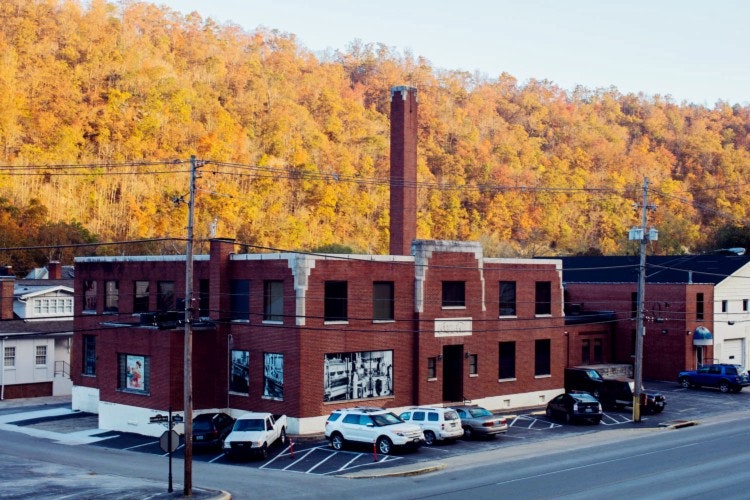
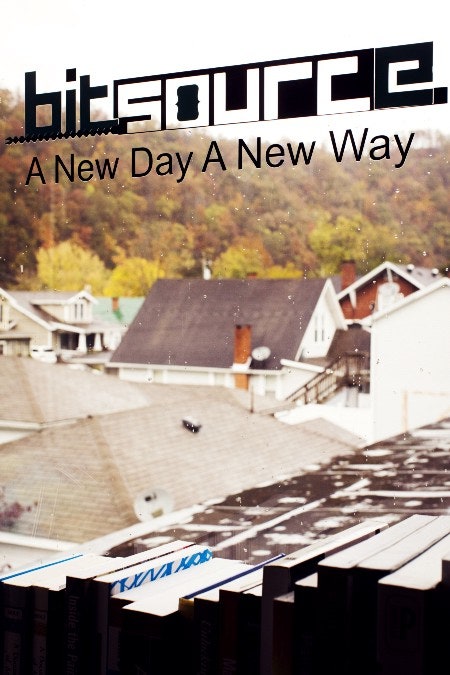
A 2015 WIRED magazine piece recounts how after attending a SOAR conference, Rusty Justice (a fitting name if there ever was one), owner of a land-moving company, was inspired to co-found BitSource, a tech startup, in Pikeville, KY, that recruited coal miners to code out of an old Coca-Cola bottling plant. Another motivating factor was Michael Bloomberg. Justice heard Bloomberg say, “You’re not going to teach a coal miner to code” in a conversation with Mark Zuckerberg and was incensed by his patronizing attitude. Justice and his partner received 900 applicants for 10 openings. The whittling down process included a test that evaluated three criteria: “Were they logical? Were they technical thinkers? And could they actually sit in a chair for eight hours a day?” The new tech job after training brings in about $18 an hour which is lower than an average miner salary of between $60,000 – $80,000. But the article points out that among the recruited there’s hardly any nostalgia, one of the BitSource employees, a former coal mechanic, tells the reporter, “No, I don’t miss this at all… I didn’t like the work, I liked the people.” 

A former Coca-Cola bottling plant is the new home to BitSource. Photo: Philip Scott Andrews
BitSource coders work on troubleshooting two of their current projects. Photo: Philip Scott Andrews
Homes clustered together are seen out a second story window at BitSource. Photo: Philip Scott Andrews

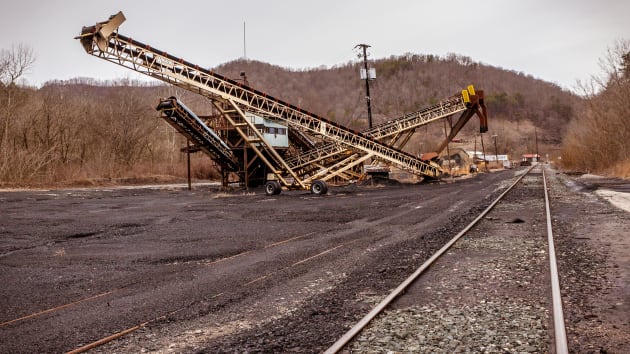
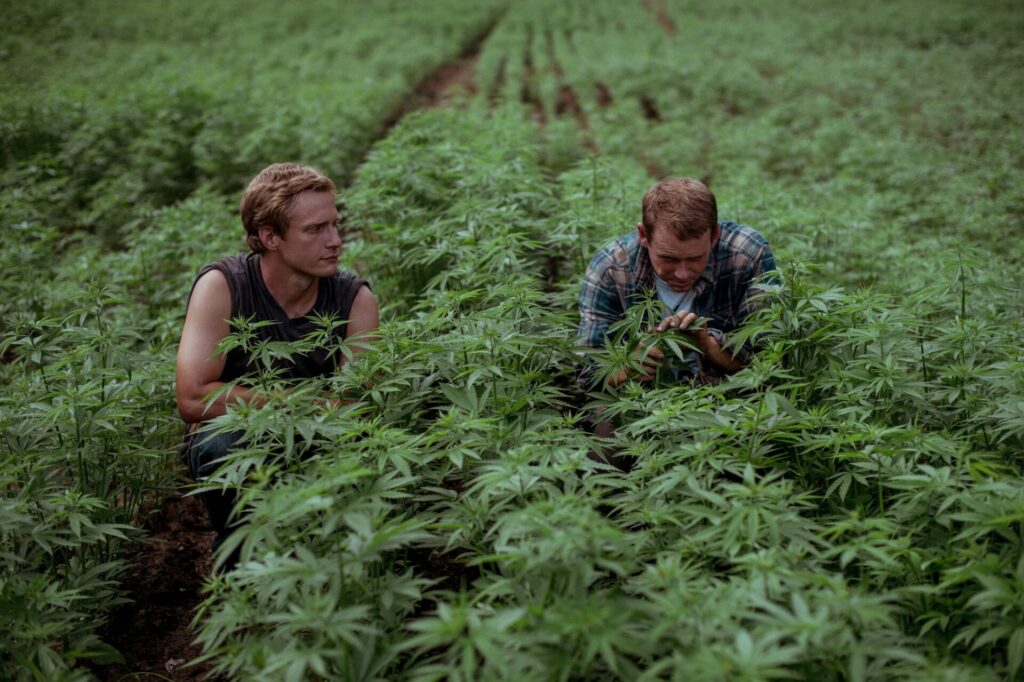
There are other ways of reinventing work in the coal country besides coding, which is only viable to a small segment of the coal population. There has to be. It’s no secret that coal jobs have been on a steep decline for decades and employment is at an all-time low since the late 1800’s. In Kentucky alone, in 2016, the number of jobs dropped by nearly 1,500 during just the first three months leaving an estimated 6,900 employees in the industry. The 2020 pandemic accelerated the loss: Over 6,000 coalmining jobs were lost in March and April 2020. In West Virginia, UMWA Career Center helps laid-off coal workers find jobs in commercial driving, electrical technology, chemical processing and medical jobs providing $5,000 toward retraining and $20 for each day they attend classes. While many ex-miners look for skill-based work, some are turning to farming. With the help of Community Farm Alliance, a group of multi-generation Kentuckians have started growing heirloom tomatoes and hemp on reclaimed surface mine. 

An old coal processing plant in Hazard, Kentucky. Photo: Robert Hall/SmoothPhoto
Nathan Hall, left, and Todd Howard checked a field of hemp, one of six sites the pair manages. Instead of a silver bullet, Mr. Hall said, “We want to be a part of the silver buckshot that’s going to hopefully transform this region.”
Photo Credit Mike Belleme for The New York Times

In February 2019, the Washington Examiner published an article titled, “Green New Dealers look to support miners while killing coal.” Against the pushback the GND received from coal lobbyists – “They are wrong. The coal industry is not dead. It can come back, and will, when prices become favorable;” “They are getting ready to disrupt the lives of folks who want to live in Appalachia…” – the conservative news site outlined the coal decline in stark terms for its readership: “[Even before the Green New Deal] more coal plants shuttered in President Trump’s first two years than were retired during former President Barack Obama’s first term.” Greg Carlock, GND research director at Data for Progress, a progressive think tank, describes the intended approach as follow: “You overcome the perception about the Green New Deal by engaging in conversation on where they see themselves in the energy transition… You honor the culture and the role coal communities have played in making the American economy a strong, energy-rich country.”

As illustrated above, there are promising examples for life post-coal in the Appalachian regions. However, the anti-clean energy campaign will intensify before it withers and other logistical challenges impede a new technology driven industry to take hold, such as lack of high-speed internet due to rough terrain and remoteness. Logistics aside, there are other problematic areas with focusing so intently on the people of coal work: Politically and culturally, coal mining has been a shorthand for a dignified white blue-collar job and is given an imbalanced amount of priority because of the narrative associations given to the work and the geography – the backbone of American industry, American heartland, when America was great, etc. – and when we’re tapping into the rage of coal miners, we’re tapping into white rage, discounting and erasing the history and existence of Black miners in America. So while the work towards converting the minds of the people who are most resistant to actions towards Climate Change is essential, it is also equally paramount that every vulnerable group is given the care, attention and funding. 

Trumpstoreamerica.com

The World Bank and Climate Justice: Impossible Bedfellows?

Bankers! From Walt Disney’s ‘Mary Poppins’

When my feeble brain tries to picture ‘The World Bank’ it comes up with some shadowy men in bowler hats, obscured by clouds of cigar smoke in the back room of a locked building. I realize this comic book image means that I don’t quite know who runs this mysterious sounding global organization and why, so dug into it after taking in their website and their various publications on climate changes, namely “Turn Down the Heat”. Here are three questions and answers:  

  1. Who are ‘The World Bank’ and what purpose do they serve?

Founded in 1944 to rebuild the devastation wreaked by World War II,  they have two stated aims for the global economy by 2030: to end extreme poverty and to foster growth in the incomes of the bottom 40% for every country. ‘The World Bank’ is now the largest development institute in the world and “works with country governments, the private sector, civil society organizations, regional development banks, think tanks, and other international  institutions on issues ranging from climate change, conflict, and food security to education, agriculture, finance, and trade.” Their business model is to provide low-interest loans, zero to low-interest credits, and grants to developing countries. They have their own historic capital, their profits, and they can also borrow capital from their wealthy member states. The CFO Bertrand Badré has this to say:  “Don’t forget that the World Bank is a bank, not a UN agency. In order to be sustainable, a bank has to make a profit and work with a credible budget.”  

  • Could you give us a more critical understanding of ‘The World Bank’?

Absolutely. Criticisms abound, particularly of the excessive neo-liberal policies adopted by the organization. As anyone with a loan knows all too well, it has to be paid back. And when you’re one of the worlds’ poorest countries, this means sacrificing money that could be spent on infrastructure or education or healthcare to repayments. A report from the Committee for the Abolition of Illegitimate Debt also points out that “…any debt relief remains conditional on the application of a wide range of neoliberal measures that negatively affect the living conditions of most of the people, violate human rights, and weaken the economies of the countries concerned by exposing them to international competition…” The organization is not a democratic one, with wealthy countries in the Global North making up its powerful majority. The U.S gets to dictate a lot, because it has a 16% share of the vote. David Malpass, the current president, is himself a failed banker and a Trump loyalist. And last but not least, an intervention from ‘The World Bank’ can often do more harm than good to the people it purports to help. That leads me to my final point.

  • What does the World Bank have to do with the climate crisis?

Honestly? A lot. This is their take.

Climate change is a major risk to good development outcomes, and the Bank Group is committed to playing an important role in helping countries integrate climate action into their core development agendas.” From www.worldbank.org

However, while they are loaning and granting many billions of dollars to climate – forward initiatives globally, this focus on economic development over everything seems like a huge missed opportunity along the lines of what Bina and La Camera concluded in their analysis ‘Promise and Shortcomings of a Green Turn in recent policy responses to the Double Crisis’, namely that growth has become synonymous with modernity and success, while justice and well-being are way down the list. This goes for climate justice too: an economic approach is not enough, what is required is a paradigm shift. And as for the past, a wide-ranging investigation by the International Consortium of Investigative Journalists found huge problems with the bank’s projects. From 2004 to 2013 alone, they physically or economically displaced an estimated 3.4 million people, forcing them from their homes, taking their land or damaging their livelihoods. By financing dams in Brazil and coal-fired power plants in India, the bank damages and destroys the natural environment and the people living there, as well as racking up more carbon emitting and rapacious infrastructure that contributes to long-term climate chaos.  

Gaia Offended

A found poem created from the text of the Green New Deal by Alexandria Ocasio-Cortez and In Catastrophic Times by Isabelle Stengers. 

Gaia Sacred System, digital painting by Cristina McAllister 
the earth was not ours

we have chosen
Gaia’s intrusion
we, the probable protagonists
suspended in time

inheritors of history, of destruction
catastrophic collapse
bearers of a compass
separated from truth
truth, that disturbs

a world become spectacle
rhythm of news
wheels of fascination
dreams of the rich

freed predator
panic on the markets
progress defined as growth 
criminal growth
hunting the unemployed
the unhoused, millions 
sacrificed at the
altar of growth

a point of departure
an era come to an end
another history begun

stop, prevent, repair 
oppression
of indigenous, of color
of migrants, of workers
of us
this war requires all

reclaim, relearn abstract possibility
collective culpability
public ownership, community-defined
universal access
to nature
to justice, equity, economic security

take root again, in soil
call it joy
joy is 
to act, to think, to imagine 
together
joy, an epidemic

shatter fabrications, atom by atom
build resiliency, fair and just
detoxify the narratives
the air, the water

however small, it matters
to appease Gaia, imagine
a future, radical and daring

A found poem is a form of word collage. It allows us to put various works of literature, whether fiction or nonfiction, in dialogue with each other. It’s a way of understanding and processing the meaning of what we read and consume, in addition to creating new narratives and meaning. This found poem compares the ideas presented in the Green New Deal, a legislation, and Isabelle Stengers’ philosophical contemplations about climate and unregulated economic growth. Stengers speaks in favor of socialism and believes that many of the destructions we’re currently facing are a result of capitalism. Likewise, Ocasio-Cortez’s Green New Deal is described by some as a socialist agenda. Stengers describes politicians as our guardians who keep us complacent and convince us to accept systemic injustices. However, Ocasio-Cortez is speaking out against the kind of complacency Stenger denounces. The Green New Deal attempts to put into practice many of Stenger’s theories. One thing to keep in mind is that though both Stengers and Ocasio-Cortez are critical of the unregulated economic growth and systemic injustices that resulted from decades of capitalism, they’re not opposing growth itself. Stengers is not advocating for degrowth. Similarly, job creation and economic prosperity are at the center of the Green New Deal. What Stengers and Ocasio-Cortez are advocating for is growth that is reflective, sustainable, fair, and just; growth that empowers everyone and gives them agency rather than to put power and control in the hands of a few. 

Losing Glaciers, Losing Steam

Released less than a year after Hurricane Katrina decimated New Orleans, causing an estimated 1,833 deaths and $125 billion in damage, the 2006 documentary, An Inconvenient Truth, follows former Vice President Al Gore’s campaign for Earth. Gore travels around the Country and the globe to present his PowerPoint containing extensive scientific data and compelling imagery documenting the stark effects of climate change to our planet delivered in a relatable, often humorous, and profoundly emotional manner. Director Davis Guggenheim weaves the climate science with Gore’s personal history and lifelong commitment to educating environmental managers and the public on the dire consequences of human induced global warming and the resulting climate disasters that are becoming more frequent and intense.

Gore has been fascinated with climate change data since his college professor, Roger Revelle, one of the first scientists to study anthropogenic global warming, shared his long-range study of CO2 concentrations in the atmosphere with the classroom. The correlation between the drastic increase of CO2 produced by human activity since accelerated industrialization, and rising average global temperatures is unequivocal: “Out of 925 recent articles in peer-review scientific journals about global warming, there was no disagreement. Zero,” Gore states in the film. Global warming is very real and exceedingly urgent. If humankind does nothing to address it, the planet may reach a “tipping point” wherein the breakdown of Earth System’s natural climate processes will cause dramatic shifts in weather and precipitation patterns, vastly altered species diversity, population and distribution, and devastating consequences to human civilization.

Time lapsed images of shorelines retreating, lakes shrinking, and glaciers disappearing depict the powerful effects climate change has already had to the environment in many regions of the world. And projection graphs and imagery indicate what our future may hold if humankind fails to take immediate action to halt and reverse the climate crisis. How can we achieve this as a global population? We need to collectively stop burning fossil fuels and make serious transitions to renewable energy sources. And according to a 2004 article in Science, by Stephen Pacala and Robert Socolow, “humanity already possesses the fundamental scientific, technical, and industrial know-how to solve the carbon and climate problem.” For Gore, it is a moral issue and deeply unethical to not take the steps necessary to solve the climate catastrophe we have found ourselves in.

Although the scientific community is in “100 percent agreement” on climate change and its dangers, a small group of world leaders has sought to reposition global warming as theory rather than fact to perpetuate the reign of big oil business. The political corruption goes even as far as coercing scientists to alter reports. Al Gore, wants to know: “Do we have to choose between the economy and the environment?” He thinks not. However fast forward to about ten years later, and globally we have not made the appropriate and necessary adjustments to our carbon emissions yet.

The 2017 film, An Inconvenient Sequel: Truth to Power, further drives home the point that we are heating our planet to the point of irreparable damage. And Al Gore is heated too. Becoming visibly frustrated and angry in his speeches at the lack of political response to the climate change crisis that he has dedicated his life to, Gore still will not give up. He treks through flooded streets in Miami, meets with coal mine developers in China, and consoles survivors of a devastating typhoon in the Philippines bringing us with him deeper into the social and environmental justice issues that are inevitably tied to climate change. Gore evokes the words of Martin Luther King Jr. in his speech at an event wherein he compares the challenges and accomplishments of the civil rights movement to those of the climate movement. And there are some noteworthy accomplishments including huge leaps in renewable energy development.  

The 2015 United Nations Climate Change Conference was the largest and emotionally charged hurdle overcome in the film to which Al Gore’s hard work no doubt contributed. The situation in Paris was initially looking bleak with terrorist activity two weeks prior to the conference and then the Indian Prime Minister originally unwilling to concede to the terms of the agreement. He insisted that: “energy is a basic need” and India still needs conventional energy and fossil fuel because “denying them that would be morally wrong.” This is reminiscent of Al Gore’s claim in the first film of the moral duty of humanity to act in the face of climate change but instead of from the stance of American white privilege, we are seeing the opposite prospective.    

We get a bitter-sweet ending to the film with the Paris Agreement adopted, a huge win for the Climate Movement, yet the final minutes of the movie show Al Gore grief stricken after Donald Trump is elected the 45th President of the United States. Trump’s criticism of former President Obama’s attendance at the Climate Change Conference was a foreshadowing of exactly what level of support for climate action to expect of the new administration.

While An Inconvenient Truth may have had the ability to leave viewers startled, engaged, and inspired, An Inconvenient Sequel somehow falls a bit short in comparison. Maybe it is because the audience has become numb to the exhausting problem of climate change, or perhaps the film did not push the envelope quite far enough.

A “Convenient” Model: Gore’s Behavioral Approach to the Climate Crisis

Perhaps the underscored theme in the film An Inconvenient Truth is hope. But it is a certain kind of hope, a hope that is entrenched in perseverance and commitment. While Al Gore’s lectures all around the world seem heavily pronounced with this hope, despite the “inconvenient truth” of global warming, the tonal aspects of the film ultimately function as an accordion playing out signals for hope and alarm for the audience.

Al Gore, a quintessential underdog who has travelled all around the world, in order to save the world; for decades, doing the same work and improving upon it, even as time reveals more damage around the world from global warming; persisting, even when the naysayers call him a “hoax” or a threat to American society; he preserveres in his commitment and rings tirelessly the alarm bells of a “moral issue,” “not a political one,” all while reminding his audience that they have a choice and humankind can do anything, even the unthinkable, even the impossible.

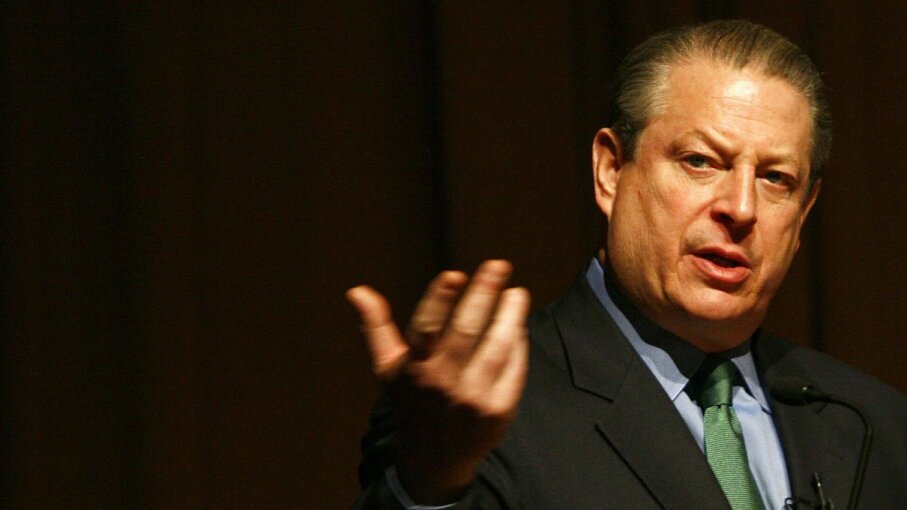
Al Gore in 2007 discussing the impact humanity has had on the planet's ecosystem. Lluis Gene/AFP/Getty Images

Al Gore in 2007 discussing the impact humanity has had on the planet’s ecosystem. LLUIS GENE/AFP/GETTY IMAGES

The film’s incessant framing of Gore as a hero can be distracting to the significant messages in the film, such as the damaging effects of 2005’s hurricanes, the loss of polar bears , the increasing heat over the current years , and major potential disasters arising for Beijing and Calcutta. At each circumstance, I am waiting for more information, left with questions. What measures are being drawn up to prevent these issues? What new technologies could help us gain “dramatically altered consequences”?

But, at the same time, despite the film getting nowhere close to any resolve for any of these issues, it is, essentially, this certain hope of Al Gore that is to set the precedent for global warming awareness-raising. It is Gore’s universal commitment that is emphasized in the film. He travels the world, seeks out scientists, has been involved for decades, he thinks about the future. In some way, Gore is the “hero” of the [first wave of] climate crisis attention.

An Inconvenient Truth, despite its shortcomings or its conceits, ultimately presents a model for a behavioral approach to climate crisis: stick to truth, and stay with it, because, no matter what you may lose, nothing compares to losing the planet.

For more, check out: https://science.howstuffworks.com/environmental/conservation/conservationists/inconvenient-truth-sequel-al-gore.htm

Down to Earth: How we must learn to Degrow and embrace the Pluriverse

Patterns of Commoning: Commons in the Pluriverse | P2P Foundation

Climate Change, extraordinary inequities, migrations of people and loss of place, global pandemics – What we are experiencing in 2020 is the socio-ecological collapse of human beings on this planet. As Bruno Latour points out in his essay, “Down to Earth: Politics in the New Climatic Regime,” the fundamental problem is mentality. It is a mentality that has guided our political economy for the last 400+ years, it is the mentality of modernization, development and growth. This mentality is now seeing it’s limits in the 21st century as we simply do not have the resources in people and planet to sustain this growth.

The Degrowth Alternative

Latour gets a little heavy handed in his categories of ‘globalization +, globalization minus, local plus and local minus,’ and he gets a little hung up in these dualisms that slightly retract from his thesis that we need to look at the world in a new way. He does note that, “everything has to be mapped anew…even the markers of space and time ‘local,’ ‘global,’ ‘future,’ and ‘past.'” But he never quites offers what this new paradigm would be, what it really means to come ‘down to earth.’ At the end of chapter six he states, “It is not a matter of learning how to repair cognitive deficiencies, but rather how to live in the same world, share the same culture, perceive a landscape that can be shared in culture.” (23) Latour is so close, he needs to take it one step further, to realize that he too is still ascribing to the universalistic, single vision theory of growth, development, and modernization.

The answer to Latour’s ontological political crisis can be found in some of the ideas of the post-development theories such as degrowth and the pluriverse. In Design for the Pluriverse, Arturo Escobar regards these conflicts Latour points out as:

“Ontological Struggles. They refer to a different way of imaging life, to another mode of existence. They point towards the Pluriverse; in the successful formula of the Zapatista the pluriverse can be described as a ‘world where many worlds fit.'”

Escobar, Arturo. Sustainability: Designs for the Pluriverse
Development, 2011, 54(2), (137–140)
2011 Society for International Development 1011-6370/11
www.sidint.net/development/

Latour is struggling to combine notions of global and local, modernity and reactions against it to fit in the same world, when in fact to take the pluriverse perspective, they are of different worlds that can share the same space. This perspective liberates Latour’s categories and celebrates the multiplicity of all the political economic dimensions that the world has to offer.

Similar to Degrowth, the pluriverse offers a perspective in which to construct new realities. Latour was still trapped in the paradigm of the global-capitalist-development schemas, in trying to understand the politics behind them. In a pluriverse perspective, many worlds exist and the narrative of modernity/globalization/development is only one of them. The Paris agreement too is still trapped in that single perspective. The opening language refers to ‘sustainable development,’ ‘eradication of poverty,’ these are all single vision notions that do not take the multiplicity of the world into their perspective. The language of the paris accord agreement is simply greenwashing development, of finding a way to continue the same narrative and paradigm of the last 400 years.

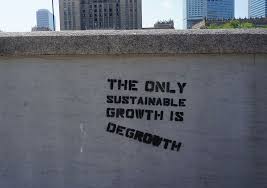
If we want to avoid eco-social collapse, we must embrace the Pluriverse, and transition to economies of Degrowth. Degrowth asks that we consider other social objectives other than economic growth, such as sharing, caring, conviviality and the equitable downsizing of production and consumption. It essentially frees up other ways for other societies to consider paths that they want to take without imposing them to the global capitalistic order through our actions. It embraces the pluriverse, and imagines different ways human beings can exist with each other and this planet.

The Rug Has Been Pulled Out: Distributional Failure’s Fallouts

A Topical Analysis & Sort of Reading Response by Carol Joo Lee

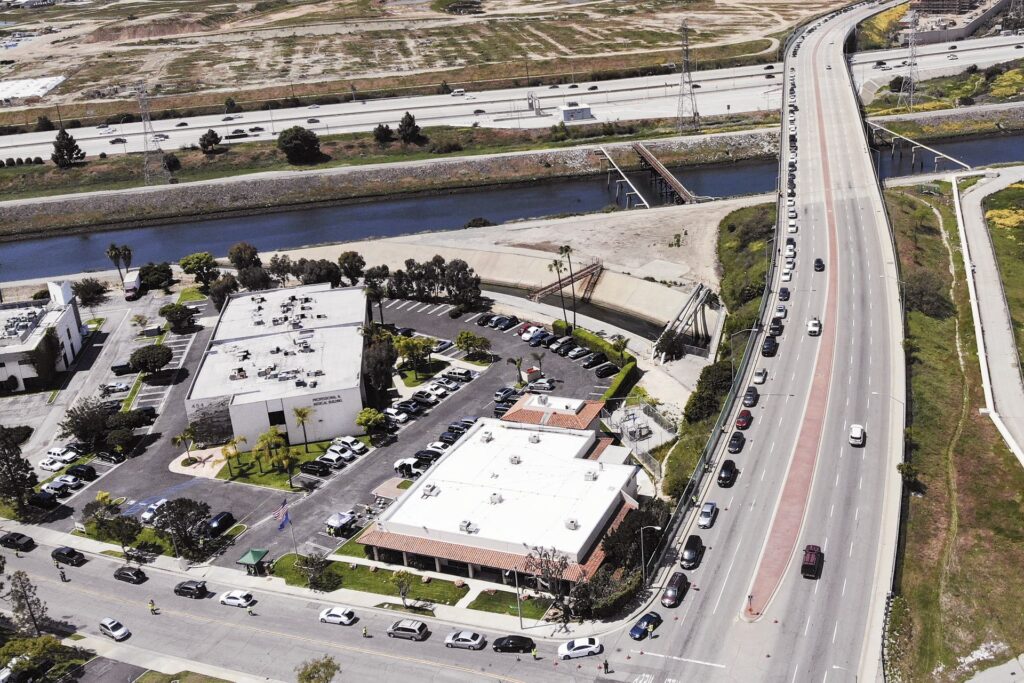
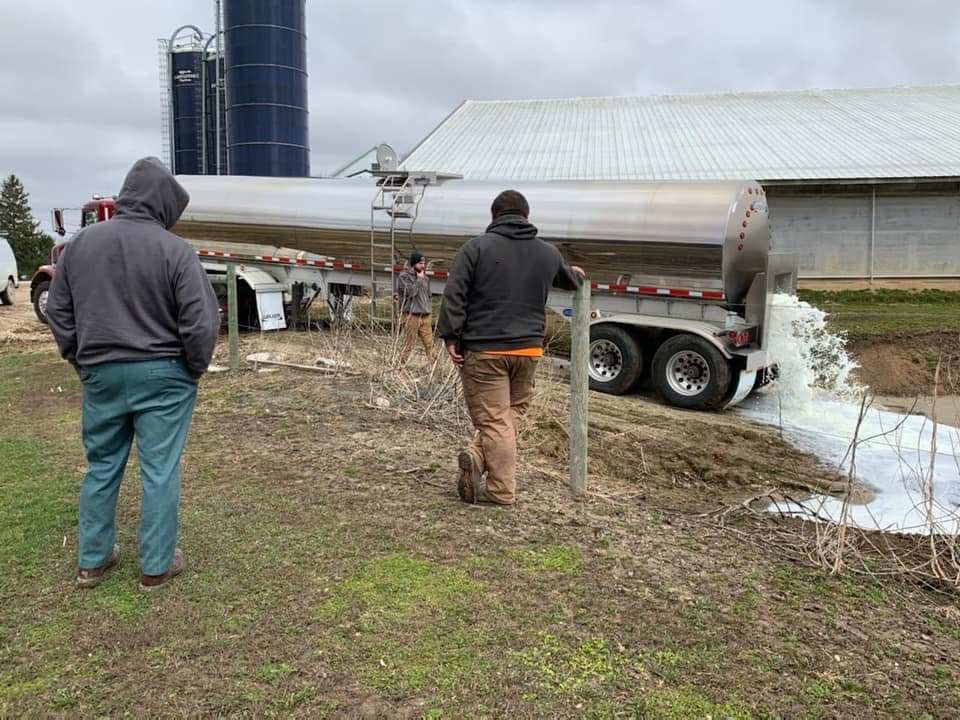
One of the most indelible images of this unprecedented time of Covid-19 is of a dismayed farmer in a field littered with his rotting crop. Another is a line of cars stretched on the highway beyond the frame of the picture outside a food bank – the location could be Anywhere, USA – awaiting hours for a box of groceries. As we witnessed these two heartbreaking, non-intersecting worlds, we saw clearly, among the many systemic vulnerabilities the 2020 pandemic has exposed, the limits and dangers of our current ways of distributing food. As crop and dairy farmers across the country faced the grim reality of having to dump their produce, milk and eggs as schools, hotels and restaurants shut down, millions of Americans, laid off due to no fault of their own, were on the precipice of going hungry. Neither food waste nor hunger is a new phenomenon. However, it is something else to see them side by side, interlinked and unresolved. Many wondered upon seeing these two realities juxtaposed against each other, why can’t this food reach the hungry in an advanced country like ours? It was hard to argue with Rebecca Solnit, that “We are a country whose distribution system is itself a kind of violence.” 

Hank Scott, president of Long & Scott Farms, stands in a field of rotting cucumbers that he was unable to harvest due to lack of demand on April 30, 2020 in Mount Dora, Florida. Joe Raedle | Getty Images
The Los Angeles Regional Food Bank distributes food in Carson, California, on April 18. Getty Images
Dairy Farmers in West Bend, Wisconsin. Copyright 2020 Nexstar Broadcasting, Inc.

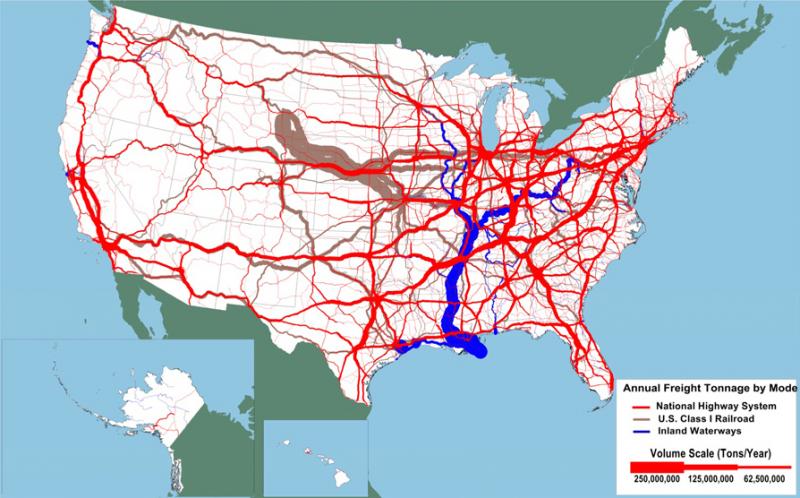
The pandemic put the strains of centralized food distribution systems under a microscope – we saw the failures plainly. It pulled the rug out from under our feet and as Bruno Latour asserts, the challenge became “much more vital, more existential… also much more comprehensible, because it is much more direct.” We were forced to “be concerned with the floor.” But Climate Change has been wreaking havoc on the status quo modes of food distribution for decades yet the government has done little to improve the situation. According to EarthIsland.org, In New York City, most of the 5.7 million tons of food that arrives in the city annually passes through Hunts Point Distribution Center, the largest wholesale market in the United States, which sits on the edge of the Bronx River, surrounded on three sides by water. Almost all this food comes by truck – nearly 13,000 semis each day. 

The structure was spared during Hurricane Sandy but traffic restrictions and road damages in other parts of the city caused a major disruption. The hurricane also triggered power outage causing refrigeration and payment systems failures. This is just one example of how a perfect storm of long-distance transportation, centralized wholesale markets, the concentrated food production under a natural disaster can paralyze food distribution affecting a large scale food waste and insecurity, especially to the already vulnerable population. In another instance, the severe drought of 2012 led to near-record low water levels of Mississippi River, a major transcontinental shipping route for Midwestern agriculture, forcing barges to carry lighter load and increasing shipping costs, which resulted in significant food and economic losses.

This map indicates the amount of freight moved across portions of the United States via different modes of transportation in 2007. (US Climate Resilience Toolkit)

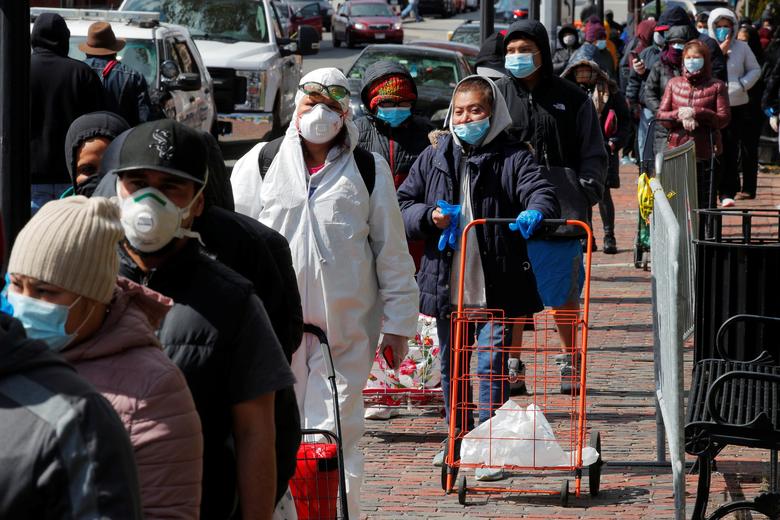
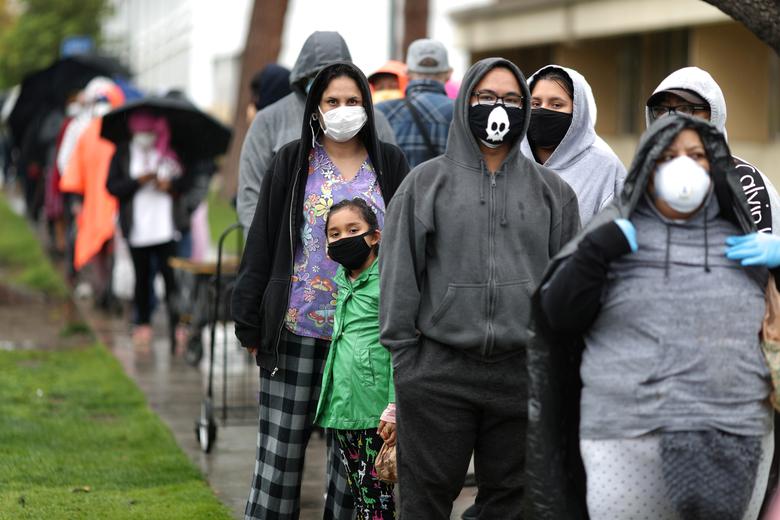
Distributional failure amplifies the obscene problem of food waste. Yale Climate Connections reports, 30% of the food produced globally is wasted every year. In the US, that number jumps to a whopping 40%. If food waste were a country, it would be the third-largest emitter of greenhouse gases behind China and the U.S., according to the World Resources Institute. These numbers are not entirely surprising, yet, nonetheless shocking and disturbing. The main factor in this scandalous amount of waste is over-production which also contributes to unnecessary GHG emissions. Add to these already grievous facts, unforeseen distribution breakdowns as we witnessed on the onset of Covid-19 lockdowns compound the food waste problem, which compounds the food insecurity problem. When I look at the faces of the people lined up for food in much circulated photographs during this pandemic, I suspect that I will see almost the same makeup of people in the near-certain future climate-related catastrophes that disrupt access and means to food – largely BIPOC, elderly and low-income. 

Nelly Avila, wearing personal protective equipment, waits in a line for a pop-up food pantry in Chelsea, Massachusetts, April 17.   REUTERS/Brian Snyder
People queue to pick up fresh food at a Los Angeles Regional Food Bank giveaway of 2,000 boxes of groceries in Los Angeles, April 9.  REUTERS/Lucy Nicholson

The 2018 IPCC Report on Global Warming of 1.5°C filed “the impacts of global and regional climate change at 1.5°C on food distribution” under Knowledge Gaps and Key Uncertainties. It now seems, in the wake of a pandemic, the outlines that weren’t so clear two years ago have been brought into sharper relief. Though we may be lacking definitive data, on a visceral level, the impacts are and will be widespread, panic-inducing and life-threatening. As we strive for mitigation and adaptation to 15°C pathways, alternate and equitable modalities of food distribution systems are critical in reducing poverty and inequalities, as well as GHG emissions. In a larger sense, in Solnit’s words, Climate Change is not suddenly bringing about an era of equitable distribution. But surely, without concerted efforts to change the broken ways and redirect our climate and moral trajectories, there will be no rug and no floor to land on. 

Arctic National Wildlife Refuge

‘Drill, Baby, Drill’ and the American ‘right’ to cheap oil

“Drill, Baby, Drill.” These words call to mind former Alaska Gov. Sarah Palin and the 2008 presidential election, when many Americans were outraged over $4/gallon gasoline prices, and many Republicans sought to solve this “problem” with increased drilling offshore and in the Arctic National Wildlife Refuge. 

Palin popularized a phrase written by Michael Steele, then the Lieutenant Governor of Maryland, who went on to Chair the Republican Party.  As he recounted in an interview, he was writing the speech at 2 am the morning before he was due to give it, and felt he needed something catchy. He came up with “drill, baby, drill” — which brought to mind a phrase associated with the Black Panthers in the late 1960s, “Burn, baby, burn!” — but fretted that it might not be appropriate for a nationally televised speech.

https://www.youtube.com/watch?v=GaNiGwhmQeo

There was no need to fret. When Steele said the words, delegates at the convention immediately broke out in a “drill, baby, drill” chant, which continued into the fall presidential campaign (even though their nominee opposed drilling in ANWR and supported cap-and-trade legislation to limit carbon emissions). The chant conveyed an argument that increased drilling would lead to the cheap gasoline prices Americans need and deserve. 

Though it would be difficult to measure cause-and-effect impact, the chant correlated with a significant shift in party platform: In 2008, the Republican platform acknowledged human contribution to carbon levels and called for “technology-driven, market-based solutions that will decrease emissions, reduce excess greenhouse gases in the atmosphere, increase energy efficiency, mitigate the impact of climate change where it occurs, and maximize any ancillary benefits climate change might offer for the economy.” Four years later, even after a spill discharged 4.9 billion gallons of oil into the Gulf of Mexico, the party all but adopted “Drill, baby, drill,” with a platform that opposed “any and all cap and trade legislation” and demanded that Congress “take quick action to prohibit the EPA from moving forward with new greenhouse gas regulations.” 

In her piece, “Petro-masculinity: Fossil Fuels and Authoritarian Desire,” Cara Daggett addresses this Palin-Republican belief that Americans have a right to cheap fossil fuels:

“No wonder that access to cheap and plentiful gas and energy became the sine qua non for American well-being, and a right demanded both of the state and for the state. Even as Americans in the 21st century disagree about whether health care or food should be considered a right, there is a widespread, bipartisan assumption that Americans deserve cheap energy, and that the state has a duty to ensure it. In turn, any threat to energy supply appears simultaneously as a threat to the American dream and, in turn, the dominant position of the US in the world.”

And though her argument focuses on masculinity, Daggett acknowledges that more than half of white women voters were drawn to a different slogan, “Make America Great Again.”  These women (presumably Palin included), Daggett argues, find “security in the status quo, and therefore resent threats to fossil fuel systems and/or hegemonic white masculinities.”

Daggett also makes direct reference to Palin: “Fossil fuel systems provide a domain for explosive letting go, and all the pleasures that come with it – drilling, digging, fracking, mountaintop removal, diesel trucks. In the words of Sarah Palin, ‘drill, baby, drill!’”

Of course, the obsession with cheap oil and fossil fuel reliance flies in the face of environmental experts. The UN Intergovernmental Panel on Climate Change reported in 2018 that carbon pollution would have to be cut by 20 percent by 2030 to limit warming to 2 degrees Celsius, or by 45 percent by 2030 to limit warming to 1.5 degrees. And in the largest public statement of economists in history, more than 3,500 economists from both sides of the political aisle signed a statement calling for a tax on carbon — not a reduction in prices, as Palin and others have called for — as key to limiting greenhouse gases. 

Cheap oil is not a right, as it passes enormous costs onto future generations.

For Palin, “Drill, baby, drill” wasn’t just a slogan or proposed policy, it was tantamount to a divine mandate. In the years since the 2008 campaign, she coupled “drill, baby, drill” with a reference to our oil reserves as “God-given resources,” suggesting that our Creator intended for Americans to drill and extract oil. 

In 2015, while suggesting she would accept a position as US Secretary of Energy in a future Trump administration, Palin said, “Oil and gas and minerals, those things that God has dumped on this part of the Earth for mankind’s use instead of us relying on unfriendly foreign nations … No, we’re not going to chill. In fact, it’s time to drill, baby, drill down.”

If Palin is looking to God for energy policy, she should drill down instead on Pope Francis’ Laudato Si: On Care for Our Common Home and the words of other Christian leaders who believe combatting climate change is a moral issue.

The New Normal: Climate Change Spurs Hudson River Fish Die-Off

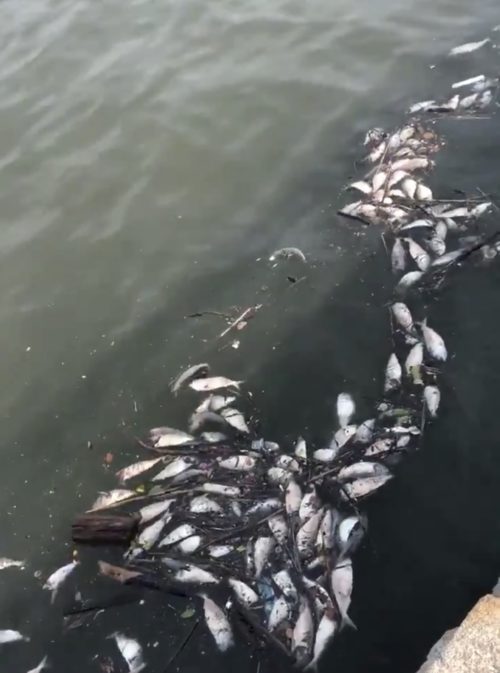
Thousands of dead fish floating in the Hudson River. Image courtesy of UWS Live.
Hudson River Fish Die-Off Was Exacerbated by Climate Change, Scientist Says by Carol Tannenhauser

Did anyone notice the dead fish floating all along the Manhattan shore of the Hudson River on the 4th of July weekend?  It is another glimpse of the new normal in our rapidly-warming world:  a substantial fish die-off in the Hudson barely receives attention.  Days of dead fish for miles, almost all of one species—Atlantic menhaden, also known as bunker fish—were to be seen floating in the tide.  The cormorants and seagulls were not interested—I thought they must already have gorged themselves on these fresh-dead fish to pass them up—yet an odd sense settled in that the seabirds’ instincts told them to leave those fish be.  Every now and again, a fish could be seen swimming on its side, swimming in a tight circle, in its death throes.  It was a horrifying sight, juxtaposed with people enjoying a sunny day on the waterfront.

The official word, hastily looked up and reflected on my phone on July 3rd was that the bunker, which swim in schools, must have hit a pocket of low-oxygen water and essentially suffocated en masse.  Low oxygen is caused by climate change as the water warms, and by fertilizer runoff in the water, the resulting algae blooms consuming more of the oxygen fish need to survive.  When water warms it holds less oxygen because its molecules are more kinetic than that of colder water.  The fish die from hypoxia, a lack of oxygen.  A ‘natural occurrence,’ it’s been known to happen, but apparently never as bad as this year.  (I did see a dead eel and what I think was a striped bass as well, but the others were uniformly Atlantic menhaden.)  Some were headless, but some were completely intact, reflecting a continuing scenario—one in which it took some fish longer to succumb.

What sources to turn to for information?  New York State Department of Environmental Conservation, in contrast to the federal government, has taken an active role in reducing emissions and fighting climate change.  I would have a healthy dose of skepticism in considering anything put forth by the gutted federal EPA in the current administration, after our withdrawal from the Paris Climate Agreement and alongside continuing, wrong-headed and confounding efforts to support the fossil fuel industry as though climate carnage was not a thing.  New York State, referred to as a “subnational actor” in the UNEP Emissions Gap Report of November 2019, is among the states whose policies adhere to Paris Agreement levels of cutting emissions, regardless of the cynical federal retreat.  Riverkeeper.org is the organization to which I turned for information in this very disturbing case of the impressive fish kill.

I first learned about Atlantic menhaden, bunker fish, in Montauk last year.  On our annual camping trip to Montauk, we saw humpback whales spouting and jumping from where we stood on the beach.  Bunker, we were told, travel in large schools and whales follow them.  Never in a quarter century of summer visiting did we see whales from the beach.  It, too, was an astounding sight, two whales jumping in graceful unison.  We joked, slightly uneasily, that these were the End Times and evidence that the world is changing.

Jonathan Watts, summarizing UN findings in the Guardian in 2018, in which the headline 2 years ago blared:  “We have 12 years to limit climate change catastrophe, warns UN” notes that in the most stringent, optimistic, best-case scenario, in which we limit ourselves to 1.5° C of climate increase, 1.5 metric tons of fish will die from ocean acidification and heating.  An additional half-degree warmer would double the die-off to 3 metric tons.  The specter of massive fish die-offs is suddenly imaginable.

At the 79th Street Boat Basin this summer, the usual sunset sight of the Clearwater Sloop docking and dispersing its groups of happy passengers is missing due to the pandemic.  People traditionally set sail on the Clearwater for a several-hour tour to learn of the Hudson River’s ecology, the restorative cleanup of toxic PCBs from the 1970s, while enjoying the beautiful vistas of the Palisades and the Hudson itself.  For those who remember the polluted years of the Hudson, it was a victory lap of sorts.  I wish more people could see the sight of those dead fish, an unnatural alarm bell.

Riverkeeper notes that the Hudson is a delicate ecosystem.  I worry that these ‘little’ signs, while explainable, are ominous.  I’ve always known seagulls to be voracious feeders; even they seemed suspicious.  Radical climate change is already upon us and we cannot become inured to the obvious.  It is time to commit to action to preserve and to protect our ecosystems, not to shirk our responsibility.  The Fourth of July scene on the Hudson must be a clarion call for the U.S. to recommit to the Paris Agreement.