Category Archives: Posts

Arctic National Wildlife Refuge

‘Drill, Baby, Drill’ and the American ‘right’ to cheap oil

“Drill, Baby, Drill.” These words call to mind former Alaska Gov. Sarah Palin and the 2008 presidential election, when many Americans were outraged over $4/gallon gasoline prices, and many Republicans sought to solve this “problem” with increased drilling offshore and in the Arctic National Wildlife Refuge. 

Palin popularized a phrase written by Michael Steele, then the Lieutenant Governor of Maryland, who went on to Chair the Republican Party.  As he recounted in an interview, he was writing the speech at 2 am the morning before he was due to give it, and felt he needed something catchy. He came up with “drill, baby, drill” — which brought to mind a phrase associated with the Black Panthers in the late 1960s, “Burn, baby, burn!” — but fretted that it might not be appropriate for a nationally televised speech.

https://www.youtube.com/watch?v=GaNiGwhmQeo

There was no need to fret. When Steele said the words, delegates at the convention immediately broke out in a “drill, baby, drill” chant, which continued into the fall presidential campaign (even though their nominee opposed drilling in ANWR and supported cap-and-trade legislation to limit carbon emissions). The chant conveyed an argument that increased drilling would lead to the cheap gasoline prices Americans need and deserve. 

Though it would be difficult to measure cause-and-effect impact, the chant correlated with a significant shift in party platform: In 2008, the Republican platform acknowledged human contribution to carbon levels and called for “technology-driven, market-based solutions that will decrease emissions, reduce excess greenhouse gases in the atmosphere, increase energy efficiency, mitigate the impact of climate change where it occurs, and maximize any ancillary benefits climate change might offer for the economy.” Four years later, even after a spill discharged 4.9 billion gallons of oil into the Gulf of Mexico, the party all but adopted “Drill, baby, drill,” with a platform that opposed “any and all cap and trade legislation” and demanded that Congress “take quick action to prohibit the EPA from moving forward with new greenhouse gas regulations.” 

In her piece, “Petro-masculinity: Fossil Fuels and Authoritarian Desire,” Cara Daggett addresses this Palin-Republican belief that Americans have a right to cheap fossil fuels:

“No wonder that access to cheap and plentiful gas and energy became the sine qua non for American well-being, and a right demanded both of the state and for the state. Even as Americans in the 21st century disagree about whether health care or food should be considered a right, there is a widespread, bipartisan assumption that Americans deserve cheap energy, and that the state has a duty to ensure it. In turn, any threat to energy supply appears simultaneously as a threat to the American dream and, in turn, the dominant position of the US in the world.”

And though her argument focuses on masculinity, Daggett acknowledges that more than half of white women voters were drawn to a different slogan, “Make America Great Again.”  These women (presumably Palin included), Daggett argues, find “security in the status quo, and therefore resent threats to fossil fuel systems and/or hegemonic white masculinities.”

Daggett also makes direct reference to Palin: “Fossil fuel systems provide a domain for explosive letting go, and all the pleasures that come with it – drilling, digging, fracking, mountaintop removal, diesel trucks. In the words of Sarah Palin, ‘drill, baby, drill!’”

Of course, the obsession with cheap oil and fossil fuel reliance flies in the face of environmental experts. The UN Intergovernmental Panel on Climate Change reported in 2018 that carbon pollution would have to be cut by 20 percent by 2030 to limit warming to 2 degrees Celsius, or by 45 percent by 2030 to limit warming to 1.5 degrees. And in the largest public statement of economists in history, more than 3,500 economists from both sides of the political aisle signed a statement calling for a tax on carbon — not a reduction in prices, as Palin and others have called for — as key to limiting greenhouse gases. 

Cheap oil is not a right, as it passes enormous costs onto future generations.

For Palin, “Drill, baby, drill” wasn’t just a slogan or proposed policy, it was tantamount to a divine mandate. In the years since the 2008 campaign, she coupled “drill, baby, drill” with a reference to our oil reserves as “God-given resources,” suggesting that our Creator intended for Americans to drill and extract oil. 

In 2015, while suggesting she would accept a position as US Secretary of Energy in a future Trump administration, Palin said, “Oil and gas and minerals, those things that God has dumped on this part of the Earth for mankind’s use instead of us relying on unfriendly foreign nations … No, we’re not going to chill. In fact, it’s time to drill, baby, drill down.”

If Palin is looking to God for energy policy, she should drill down instead on Pope Francis’ Laudato Si: On Care for Our Common Home and the words of other Christian leaders who believe combatting climate change is a moral issue.
The New Normal: Climate Change Spurs Hudson River Fish Die-Off

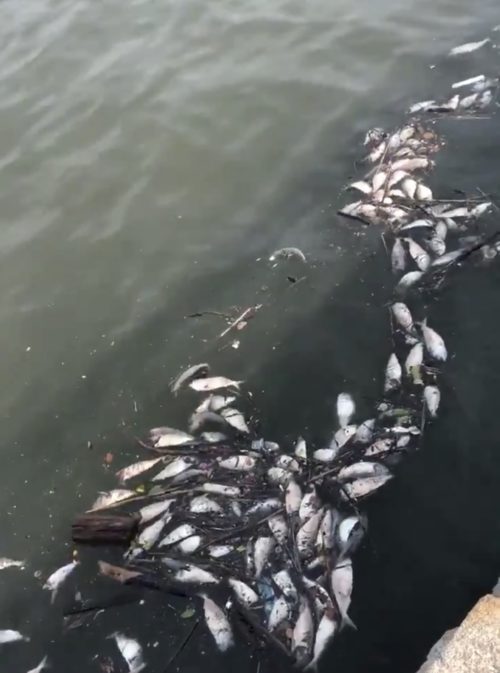
Thousands of dead fish floating in the Hudson River. Image courtesy of UWS Live.
Hudson River Fish Die-Off Was Exacerbated by Climate Change, Scientist Says by Carol Tannenhauser

Did anyone notice the dead fish floating all along the Manhattan shore of the Hudson River on the 4th of July weekend?  It is another glimpse of the new normal in our rapidly-warming world:  a substantial fish die-off in the Hudson barely receives attention.  Days of dead fish for miles, almost all of one species—Atlantic menhaden, also known as bunker fish—were to be seen floating in the tide.  The cormorants and seagulls were not interested—I thought they must already have gorged themselves on these fresh-dead fish to pass them up—yet an odd sense settled in that the seabirds’ instincts told them to leave those fish be.  Every now and again, a fish could be seen swimming on its side, swimming in a tight circle, in its death throes.  It was a horrifying sight, juxtaposed with people enjoying a sunny day on the waterfront.

The official word, hastily looked up and reflected on my phone on July 3rd was that the bunker, which swim in schools, must have hit a pocket of low-oxygen water and essentially suffocated en masse.  Low oxygen is caused by climate change as the water warms, and by fertilizer runoff in the water, the resulting algae blooms consuming more of the oxygen fish need to survive.  When water warms it holds less oxygen because its molecules are more kinetic than that of colder water.  The fish die from hypoxia, a lack of oxygen.  A ‘natural occurrence,’ it’s been known to happen, but apparently never as bad as this year.  (I did see a dead eel and what I think was a striped bass as well, but the others were uniformly Atlantic menhaden.)  Some were headless, but some were completely intact, reflecting a continuing scenario—one in which it took some fish longer to succumb.

What sources to turn to for information?  New York State Department of Environmental Conservation, in contrast to the federal government, has taken an active role in reducing emissions and fighting climate change.  I would have a healthy dose of skepticism in considering anything put forth by the gutted federal EPA in the current administration, after our withdrawal from the Paris Climate Agreement and alongside continuing, wrong-headed and confounding efforts to support the fossil fuel industry as though climate carnage was not a thing.  New York State, referred to as a “subnational actor” in the UNEP Emissions Gap Report of November 2019, is among the states whose policies adhere to Paris Agreement levels of cutting emissions, regardless of the cynical federal retreat.  Riverkeeper.org is the organization to which I turned for information in this very disturbing case of the impressive fish kill.

I first learned about Atlantic menhaden, bunker fish, in Montauk last year.  On our annual camping trip to Montauk, we saw humpback whales spouting and jumping from where we stood on the beach.  Bunker, we were told, travel in large schools and whales follow them.  Never in a quarter century of summer visiting did we see whales from the beach.  It, too, was an astounding sight, two whales jumping in graceful unison.  We joked, slightly uneasily, that these were the End Times and evidence that the world is changing.

Jonathan Watts, summarizing UN findings in the Guardian in 2018, in which the headline 2 years ago blared:  “We have 12 years to limit climate change catastrophe, warns UN” notes that in the most stringent, optimistic, best-case scenario, in which we limit ourselves to 1.5° C of climate increase, 1.5 metric tons of fish will die from ocean acidification and heating.  An additional half-degree warmer would double the die-off to 3 metric tons.  The specter of massive fish die-offs is suddenly imaginable.

At the 79th Street Boat Basin this summer, the usual sunset sight of the Clearwater Sloop docking and dispersing its groups of happy passengers is missing due to the pandemic.  People traditionally set sail on the Clearwater for a several-hour tour to learn of the Hudson River’s ecology, the restorative cleanup of toxic PCBs from the 1970s, while enjoying the beautiful vistas of the Palisades and the Hudson itself.  For those who remember the polluted years of the Hudson, it was a victory lap of sorts.  I wish more people could see the sight of those dead fish, an unnatural alarm bell.

Riverkeeper notes that the Hudson is a delicate ecosystem.  I worry that these ‘little’ signs, while explainable, are ominous.  I’ve always known seagulls to be voracious feeders; even they seemed suspicious.  Radical climate change is already upon us and we cannot become inured to the obvious.  It is time to commit to action to preserve and to protect our ecosystems, not to shirk our responsibility.  The Fourth of July scene on the Hudson must be a clarion call for the U.S. to recommit to the Paris Agreement.

Petro-masculinity: History Recycled, Reified

At first glance, the relationship between fossil fuels and white male patriarchy may be difficult to evince, but if captured through the prism of the cultural history of the West, especially of America, the relationship becomes anything but unclear. This is one of the more sobering points of Cara Daggett’s essay, “Petro-masculinity: Fossil Fuels and Authoritarian Desire” wherein the linkage between authoritarianism impulses and white male patriarchy is contextualized around the usage of fossil fuels, hence the provocative term “petro-masculinity.” 

Though the paper veers too deep into psychoanalytic territory and at times reads more like a rant than a journal article, simplistically accounting the “shared frustration among white men who have struggled to find a housewife willing to receive their veneration” for one of the reasons how the psychology of Trump supporters worked to elect the current president, the essay nonetheless engages provocatively with the Climate Change crisis. The paper connects masculinity with the usage of fossil fuels and the practice’s pointed, destructive tendencies. Whether it be a clever display of environmentally-focused analysis of semantics (Daggett deconstructs the word “petro” by presenting the diametrically opposed forces within, those of dead/rigidity (fossils) and those of life/flow (energy brought about through death)), a socio-historical reading of white male cultural bonding with fossil fuels (a leitmotif is the link between the boom of cars and the stable jobs and social positioning that American white man procured after World War II) or a psychologically engaged approach to defining authoritarianism (studies of Nazi psychology is keenly used) as an unrelenting entity hellbent on violently spreading its order and influence, Daggett’s paper impressively covers the paper’s complex topic in a rich, interdisciplinary way.

The essay leaves the reader with enough meat to chew on for days. What’s especially striking is grounding the fossil fuel-American masculinity dialectic as a response to World War II gender dynamics:

Instead of sturdy husbands and firm fathers controlling their wives and children, lisping bureaucrats and social workers were now running the show. World War II exacerbated the problem; with so many men away at the front, and women working in the factories, male authority was further eroded (37). 

Though this isn’t Daggett’s words (she references Corey Rubin here), the essay is filled with this sentiment. Daggett’s arguments tend to connect the response of American white men to the World War II “re-gendering” of society (which consisted of fossil fuels usage ala energy consumption) to the present moment when American white voters, as an aggregate, have channeled their masculinity through damning global warming movements by doubling down on fossil fuel usage (i.e. the support of bringing back coal power despite the industry’s economic impotency) in their unbridled support of Trump and his dangerous climate politics. Such connections lead us to ponder interesting questions about the effect of culture on one’s politics and consider how the refusal to let go of power is manifested in one’s political stances. Trump’s detrimental positions on Climate Change  aren’t just based in an anti-science ideology, but also a politics rooted in a nostalgia for a past for which a certain group can feel; the idea that this nostalgia is inherently related to fossil fuel usage is both a disturbing but vital thought in perhaps understanding the Trump phenomenon. 

It is disturbing in that, like the flow/rigidity dynamic that Daggett professes as the bizarre  dialectic within the fossil fuels-American masculinity model (with “rigidity” representing the blockade of culture destruction and “flow” representing the perpetuation of a dominant culture and its systemic rule), nostalgia, normally attributed to preciousness and innocence, is juxtaposed with ecosystem destruction and violence. However, it’s essential to recognize this “destructive nostalgia” since “The novelty and freedoms enabled by fossil-fuelled civilization are entangled with horrific violence, such that to embark upon fossil-fuelled life is to spark off mass species extinction just as much as it is to make possible the internet or global social movements” (31). 

Accepting this allows us to see the rubric of Daggett’s thesis as re-contextualizing the simultaneous “creation-destruction” element of the industrialization-natural environment dynamic around white male masculinity, authoritarianism and fossil fuels. Despite its engrossing angle regarding the stabilization of patriarchy in relation to the destructive usage of fossil fuels, the essay is built on a point with which many readers may be too familiar; that is, our treasures and freedoms are predicated on the evaporation of our planet. If climate deniers are to accept this, we could all be one step closer to ending the recycling of a culture and identity that preserves ecological demolition and gross exploitation of natural resources. 

What happens to the Paris Agreement without the United States?

[Illustration by Jawahir Hassan Al-Naimi]

In the beginning of June Donald Trump announced that the U.S would end its participation in the 2015 Paris Agreement. His reason was that the accord would weaken the US economy and not adhere to his America First policy. In my opinion this is a flowery way of saying the economics aren’t in it for them to care about the environment and that they want to exploit resources as much as possible to generate as much money as possible.

  Recent technologies have made it in fact more feasible to choose sustainable options then non sustainable ones in many industries, as well as create new jobs, yet the current administration is trying to gut every regulation possible that would prevent such progress.

The UNFCC site explains in detail what the Paris Agreement is:

“The Paris Agreement requires all Parties to put forward their best efforts through “nationally determined contributions” (NDCs) and to strengthen these efforts in the years ahead. This includes requirements that all Parties report regularly on their emissions and on their implementation efforts. There will also be a global stocktake every 5 years to assess the collective progress towards achieving the purpose of the agreement and to inform further individual actions by Parties.”

For this agreement to work, a program was launched to develop modals, procedures and guidelines on many issues including: Long term temperature goals, climate neutrality goals, mitigation and market/non-market approaches to name a few. With the United States being the leading economy, (for now) how will real change take place if the US is not on board, especially in terms of imports and exports? Our noncompliance would affect others compliance by working with us or purchasing our goods.

            It is quite ironic that President Donald Trump believes that the Paris Agreement does not coincide with his America First policy as it is obvious this makes us America, last. As the leading power in the world, noncompliance would drag others down with us, if not at the least have a huge negative impact, globally on any progress made. The idea of nationalism is so dangerous because it makes people believe we have any choice in the matter, that we are on our own planet, when in truth we are all one race on one earth. What happens in one small city across the globe can eventually affect everyone. We see clear evidence of this with the recent pandemic. Environmental efforts as well as catastrophes affect us all in one way or another. Efforts in sustainability should be as urgent as efforts on containing global disease, yet we see America is not first on that either.

            So much is at stake this November. We will be voting for so many issues, but one major issue will be our actions on saving the planet. Many would argue, without sustaining our world, there won’t be any other issues to fight for. There are even environmental links to the rise in pandemics. We will not fight this issue in solitude, within one nation, but we will need to join in globally, with fellow nations to combat climate change.

#climatechange #parisagreement

Another Movement, Another Leader

It is undeniable that Al Gore played a significant role in raising awareness about climate change and he has been fighting tirelessly to motivate world leaders to ordinary people to take action in their own way. The following observations about An Inconvenient Sequel: Truth to Power are not a criticism or dismissal of the important work he is doing to address climate change. They are rather an analysis of how the documentary itself works as propaganda and the underlying messages conveyed in it. At first glance it may seem that the documentary is about the urgent threat of climate change, but a deeper look shows that it is also about a strategic portrayal of Al Gore and where he places himself in the context of the climate movement. 

Al Gore claims that he’s a “recovering politician”. Yet, when we listen to the background music during some of the scenes in An Inconvenient Sequel [i.e. the melting glaciers, Al Gore negotiating, etc.], it almost makes the documentary seem like a political drama. Music and sound effects in film play a key role in evoking specific emotions from the audience. The choice of background music in this documentary builds tension and helps to portray Al Gore as a political figure who is targeted or confronted by wealthy climate deniers, the press, conspiracy theorists, etc. The music helps to convey the high stakes of Al Gore’s mission and the challenges he has to overcome to achieve them.

Moreover, the juxtaposition of Al Gore’s concession speech followed by the two Bush administrations and clips of Trump’s statements nudges the audience to think of Al Gore’s election loss as a collective lost opportunity. It makes us wonder what could have been if Al Gore had won the election and the race against time to address climate change wasn’t set back. He supports Obama’s values and climate initiatives. The documentary culminates into an impassioned speech where he compares the climate movement to the civil rights movement and makes references to Martin Luther King Jr.. This is another subtle nudge to portray Al Gore as the MLK of the climate movement. The screen grabs from Al Gore’s speech at the end of An Inconvenient Sequel show him in the same poses as MLK in photos of the “I have a dream” speech. 

Trying and Failing: A Loser’s Journey.

A decade after An Inconvenient Truth, the 2006 documentary following former vice president Al Gore’s attempt to educate and empower the public about global warming, comes this follow up feature, An Inconvenient Sequel: Truth to Power. As in the first film, viewers follow Gore around the world on his mission to empower the public about the existential threat facing us all, and to convince governments, both local and national, to stop using fossil fuels and switch instead to renewable energy. The narrative of the film builds from some devastating updates on how rapidly climate chaos is coming at us towards COP21, the 2015 United Nations Climate Conference where nation states are set to meet and figure out a united front to tackle the crisis.

This hero’s journey style documentary is spliced through nicely with some private moments, Gore removing his sopping socks after trudging through a waterlogged Miami street, and some very sweet moments of levity. On a field trip, Gore shares a joke with a Swiss scientist about the ice melt looking like Swiss cheese, “You call it Swiss Cheese, we call it Emmenthaler” their laughter is poignant in contrast to the look that comes over their faces as they watch the melted ice flow away. An elegiac score and powerful sky-eye camera work drive home the scale of this unfolding nightmare, it’s huge. TV news and personal phone footage of various climate catastrophes propel the movie forward with an impressive sense of urgency.

Gore himself is an amiable but melancholy character, somewhere between Winnie The Pooh and Eeyore. From a once thrusting young politician with the world at his feet, he quite literally conceded defeat to the powers that have since overwhelmed this country. The anti-science conservative movement was cemented in place by the victor of his 2000 Presidential race, George W.Bush and while he does not connect those dots, he speaks candidly of feeling deep levels of personal responsibility for how badly the planet has fared these past few decades.

He insists at various points throughout the film that there are reasons to hope for a brighter future where we successfully switch to renewable energy, but the facts out-weigh him and he says somewhat balefully “It’s not happening fast enough.”

The reason why it isn’t happening fast enough is not explicitly stated, and this is a mistake. Intensely neoliberal policies and late stage capitalism have allowed the fossil fuel industry to take a deep and toxic hold in the U.S. It is one of the most powerful industries when it comes to lobbying against restrictions or taxes that could impact profits. According to a recent IMF report, in 2015 the government spent $649 billion subsidizing the industry, that’s 10 times the federal spending on education. Instead of taking these giants on, the film seeks out small victories with traditional opponents, with Gore gamely taking photos with a conservative Texan mayor who uses solar power. Hurried phone calls and brusque meetings with Indian government officials provide some narrative tension, and demonstrate well enough the void between the Global North and the Global South when it comes to who needs to take responsibility for what, but it’s just not a satisfying story.

I believe the story does not work because it’s an incomplete one. Chummy mentions of ‘Elon’ (Elon Musk, of Tesla and white savior fame) and the dogged belief that some start up corporate solution will save the day combine with flashes of Gore’s own insider status at the Paris talks to show us that he is too close to strike hard enough. The rampant race, gender and economic issues intersecting with the injustice of climate change are barely touched on, aside from a trusty Martin Luther King quote at the end of the movie, and more’s the pity. The looming presence of Donald Trump, soon to undo all of Gore’s work in The Paris Agreement is the nail in the coffin for this particular strain of crusading white environmentalism. That, at least, is well captured here, for all of posterity.

Natural Disasters

The Past, Present, and Future of Climate Change: Archaeological Perspectives

A personal narrative, by Lala St. Fleur.

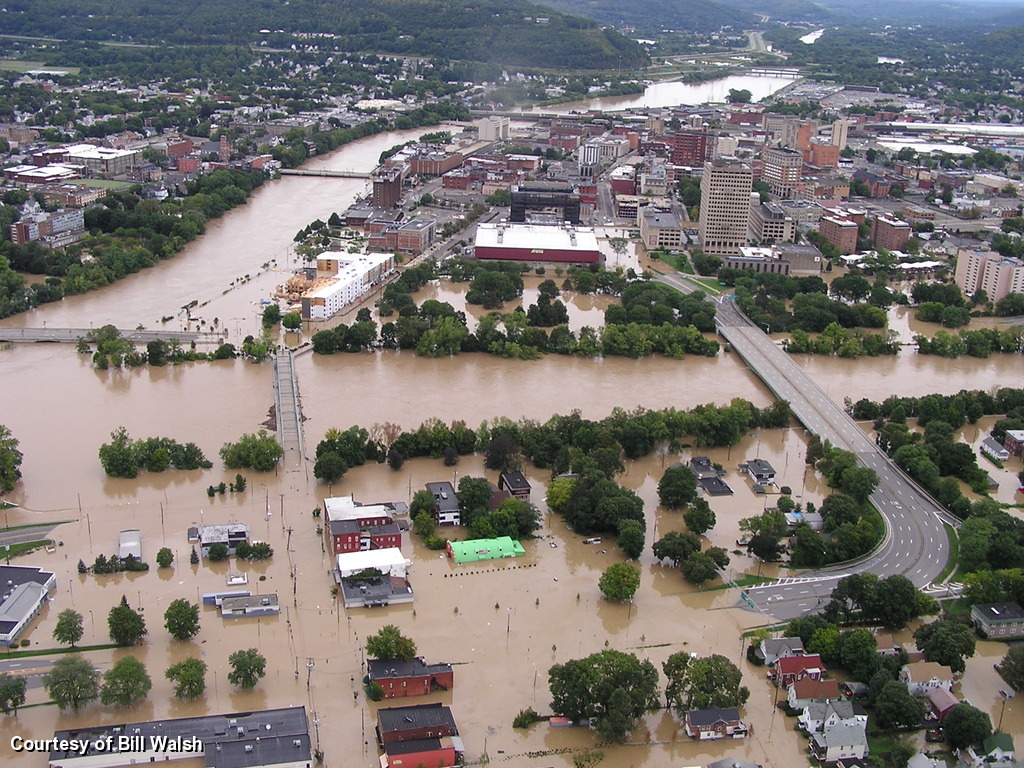
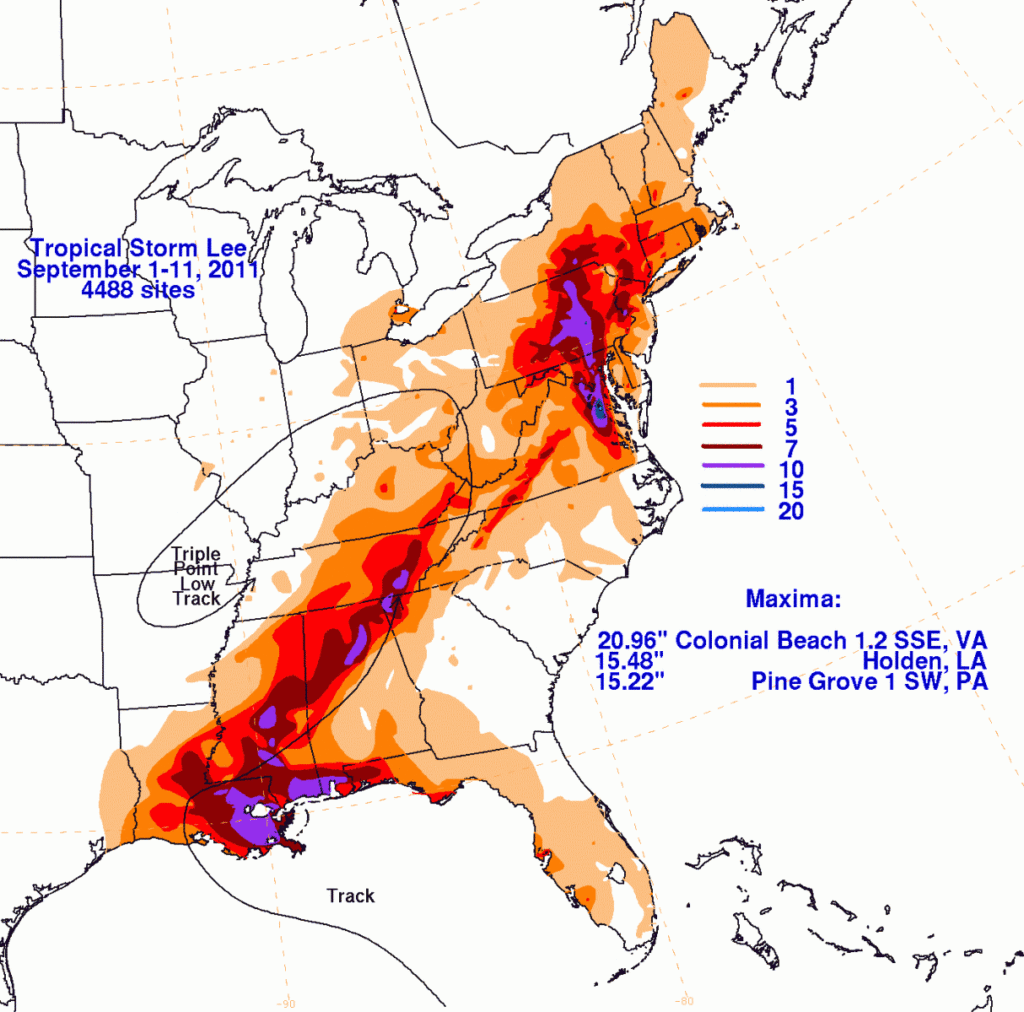
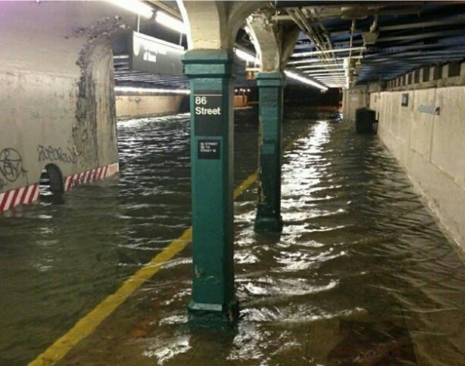
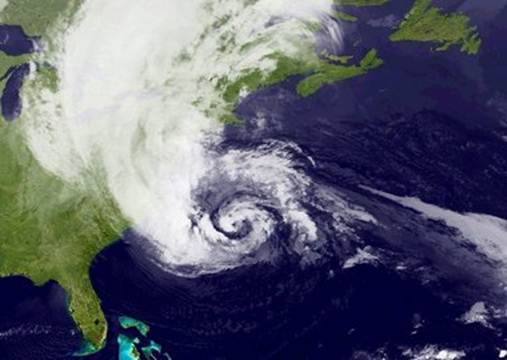
I used to live in Upstate New York, in a house with the Susquehanna River right in my backyard. In 2011, Tropical Storm Lee struck the east coast, the hurricane bringing heavy rains that flooded the Susquehanna, and all surrounding areas in New York and Pennsylvania alike. A state of emergency was enacted for my county and all others impacted by the Susquehanna, as our homes were all flooded in several feet of water. My family had to drive several counties over to find a cheap hotel that still had rooms, where we stayed for over a week to wait for the storms to pass and the waters to recede.

FEMA was called in, and inspected our house, but the relief money they gave us didn’t come close to covering the total damages and expenses. And no amount of money in the world would replace the priceless things lost; I used to be a hobbyist who drew and sketched, and all of the work I had done over the years was ruined. My family and I left Upstate NY in 2012, saying good riddance to that water-logged house and that river that had taken so much from us. We moved to NYC…only to be greeted by Hurricane Sandy that same year.

I am well aware of the very real dangers and consequences of climate change, global warming, and rising sea levels. I’ve waded up to my waist in river muck in my basement, struggling to wrap the fuse box and water heater in plastic and blankets as the water rose, only to toss everything down, grab whatever essentials we could pack into our car, and book it to drier, safer high ground.

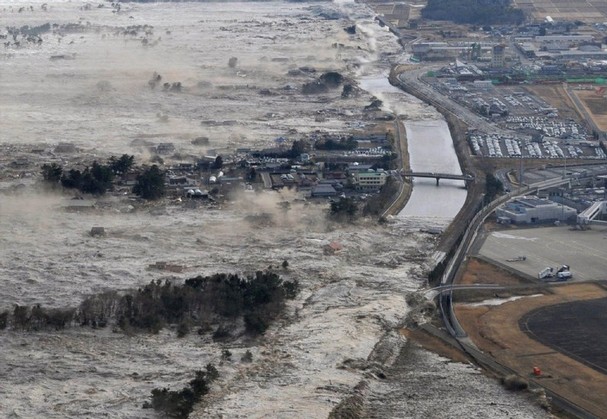
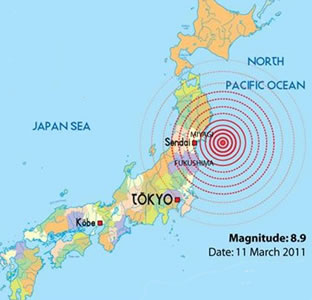
I decided to enroll in college in 2014. At CUNY’s Brooklyn College, I chose an archaeological anthropology major with a double minor in history and classics. I worked on several projects examining the ways that the ever-changing natural environment shapes prehistoric, historic, and contemporary societies, with a focus on the cultural impact of ancient religious traditions. This included my creation of an ArcGIS Story Map that digitized major Natural Disasters of Ancient Japan (specifically: volcanic eruptions, earthquakes, and tsunamis), from the Kofun Period to the Tokugawa Shogunate, which I made during junior year. I was increasingly fascinated about how everything from Japanese religious practices and mythological deities, to architecture, city planning, and government policy were influenced if not directly derived from their understanding of natural cycles and forces. And so, for my undergraduate senior thesis paper, I expounded upon that topic by writing about Japan’s cultural, economic, and political responses to geological events and disasters, from the prehistoric Jōmon and Yayoi periods up to the modern Tōhoku Disaster of 2011.

By looking at the ways that the Japanese peoples have reacted to geological changes for well over 10,000 years, it helped put things into perspective for me about the endless challenges societies face in response to geological events. But there are also equally endless possible solutions that await discovery as those events continue to be researched, so that potential crises are mitigated.

Now pursuing my master’s degree at the CUNY Graduate Center, in the MALS program’s archaeology track, my research has become further grounded in religious and environmental studies. I primarily use geomyths (mythology pertaining to geological phenomena) as my main source of inspiration for academic analysis and inquiry about the relationships between people and the (super)natural world around us.

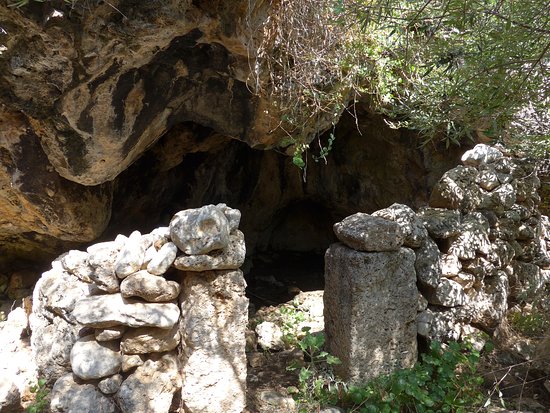
I am currently working on my master’s thesis, which examines various topographical features and archaeological sites throughout Greece that have long been believed to be the entrances to the underworld, Hades.

I enrolled in the MALS 78500 course on Interdisciplinary Perspectives on Climate Change in order to further my education about climate change, its history, and its future. For my final project, I hope to incorporate paleoclimatology into discussions about how humans have reacted to geological events, and how the planet has reacted in kind to human intervention.